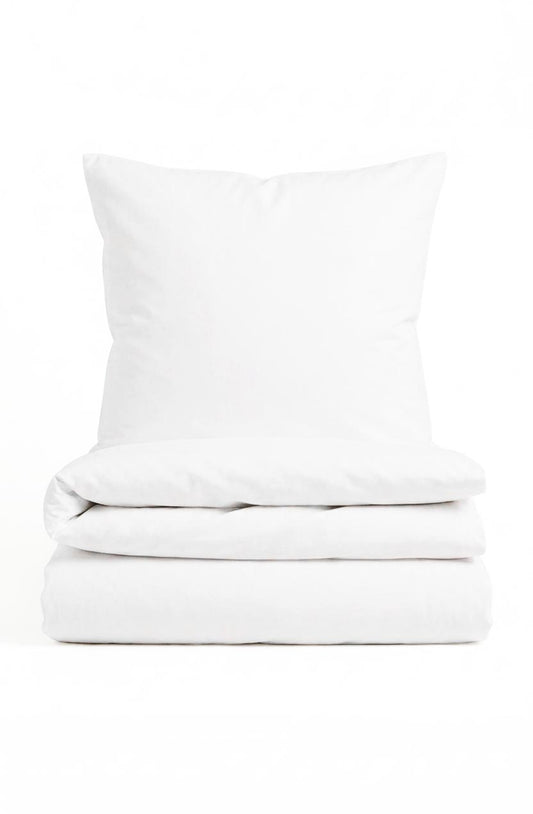
Sustainability in the bedroom: More and more people are asking whether their bedding was really produced in an environmentally friendly way. TENCEL Lyocell has established itself as a sustainable alternative to conventional cotton in recent years. But what makes TENCEL different from cotton – and which quality is the better choice?
What is TENCEL Lyocell?
TENCEL is a registered brand name for Lyocell fibres from the Austrian company Lenzing AG. Lyocell is made from sustainably managed wood, mostly from eucalyptus or beech trees. The production process uses a closed-loop system in which 99% of the solvents used are recycled.
The result is a certified sustainable textile fibre that is produced in an environmentally friendly way and also offers exceptional wearing properties: a silky-smooth surface, excellent moisture regulation, and a pleasantly cool feel.
TENCEL vs. cotton compared
Sustainability
Conventional cotton requires an enormous amount of water – up to 10,000 litres of water are used for a single kilogram of cotton. In addition, pesticides are used and transport routes are long.
TENCEL, on the other hand, is made from sustainably grown wood, requires significantly less water, and is produced in a closed-loop system. TENCEL is biodegradable and carries the EU Ecolabel. For anyone who values environmentally conscious sleep, TENCEL is clearly the more ecological choice.
Sleep comfort and feel
TENCEL fibres are naturally particularly smooth and soft – similar to silk, but much more durable. The bedding feels cool and silky on the skin, regulates moisture optimally, and dries quickly. This makes TENCEL ideal for people who sweat at night, or for year-round use.
Cotton is also pleasant, but less moisture-regulating than TENCEL. Cotton can feel slightly heavier in the heat and absorbs sweat instead of actively wicking it away.
Durability and care
High-quality cotton is very durable if properly cared for. TENCEL fibres are also very hard-wearing and become softer and more supple with every wash. However, TENCEL textiles are slightly more delicate: they should be washed at a maximum of 40 degrees and dried gently. All important care instructions are explained in our care guide with 7 expert tips.
Price
Due to the more complex production process, TENCEL bedding is generally slightly more expensive than comparable cotton qualities. However, the additional sustainability and unique sleep comfort make the investment worthwhile.
TENCEL flannel: the best of both worlds
A particularly interesting combination is TENCEL flannel bedding: here, TENCEL is combined with a soft flannel fabric. You can find out more about the special features of flannel in our comparison Biber flannel or flannel – which is warmer? The result is warm, cosy winter bedding that is also sustainable and exceptionally soft – ideal for anyone who wants to sleep warm and environmentally consciously in winter.
Who is TENCEL bedding suitable for?
- For anyone who takes sustainability and ecology seriously in everyday life
- For people with sensitive skin – TENCEL is hypoallergenic
- For anyone who sweats at night: TENCEL regulates moisture optimally
- For year-round use: pleasantly cool in summer, and warm in winter with flannel
Frequently asked questions
Is TENCEL bedding good for allergy sufferers?
Yes. The smooth fibre surface offers dust mites little grip, and the active moisture regulation deprives them of their means of survival. Find more details in the guide Bedding for allergy sufferers and in the article TENCEL against dust mites.
Is TENCEL bedding really cooling?
Yes. Lyocell absorbs moisture particularly efficiently and releases it again. This keeps the skin dry and the bed environment fresh – even on warm nights.
What sizes are available for TENCEL bedding?
biberna TENCEL bedding is available in 135x200 cm, 155x200 cm, and 155x220 cm, each with an 80x80 cm pillowcase. Which size is right for your duvet is explained in the size guide.
Conclusion: TENCEL is the future of sustainable bedding
TENCEL Lyocell combines the best of both worlds: sustainability and first-class sleep comfort. For conscious consumers who want to sleep without compromising on comfort and ecology, TENCEL bedding is the ideal choice. Cotton remains an excellent, classic option – but for a more sustainable sleep, TENCEL is the clear recommendation. Those who like lightweight summer qualities will also find suitable options in Linon and seersucker; all qualities compared in the article Bedding fabric types at a glance.
Discover our TENCEL bedding from biberna – pleasantly comfortable all year round, sustainably produced, and shipped free of charge directly from the manufacturer.