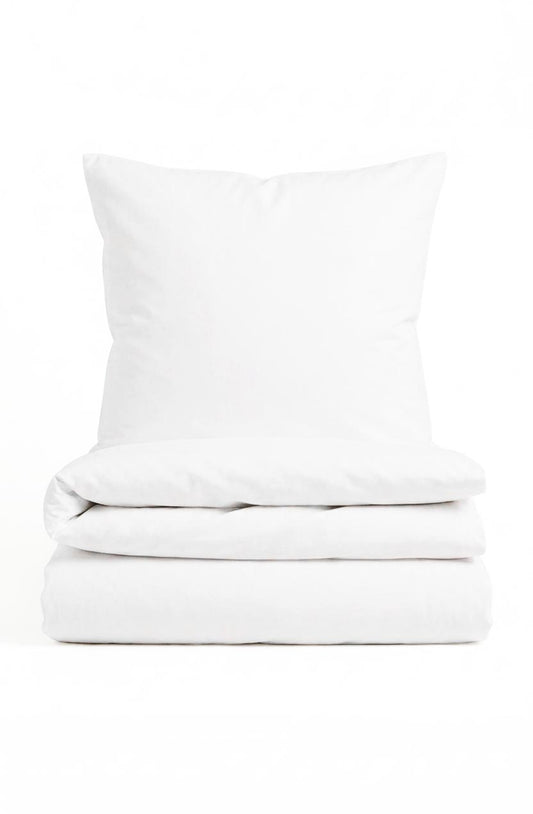
Anyone suffering from a dust mite allergy knows the problem: itchy eyes, sneezing, or a stuffy nose become noticeable, especially at night, in close contact with the mattress and bedding. The good news: With the right bedding and a few simple measures, the allergen load can be significantly reduced.
Why bedding is so important for allergies
In most cases, the triggers of a dust mite allergy are not the mites themselves, but protein components in their droppings. Dust mites feel comfortable where it is warm and damp and where they find food in the form of skin flakes – so exactly in bed. Bedding that can be washed hot and offers little living space for mites is therefore a central building block for allergy-friendly sleep.
What allergy sufferers should look for in bedding
1. Washable at 60 °C
The most important criterion: Bedding for allergy sufferers should be washable at at least 60 °C. Only at this temperature are dust mites and their allergens reliably removed. Pure cotton qualities such as Renforcé, Flannel or Mako-Satin are ideal for this.
2. Tested for harmful substances according to OEKO-TEX STANDARD 100
Look for the OEKO-TEX STANDARD 100 seal. It guarantees that the textiles have been tested for substances that are harmful to health – important for sensitive skin prone to allergies. All biberna qualities meet this standard.
3. Smooth, tightly woven fabrics
Smooth fabrics offer mites and dust less surface area than highly textured or fluffy surfaces. Tightly woven qualities such as Renforcé or Mako-Satin can also be cleaned particularly thoroughly.
4. Don't forget encasings & mattress protectors
Most mites are not in the bedding, but in the mattress. A mite-proof mattress protector or encasing encloses the mites and deprives them of their food source. In combination with washable bedding, this is the most effective measure.
Synthetic or natural fiber – which is better?
Both can be allergy-friendly. The deciding factor is not the fiber, but that the material can be washed hot and has been tested for harmful substances. Pure cotton scores points with breathability, microfiber with particularly easy care and fast drying.
Practical tips for everyday life
- Change bedding regularly and wash at 60 °C – ideally every one to two weeks.
- Keep the bedroom well ventilated and rather cool and dry – mites like it damp.
- Protect the mattress, pillows, and blanket with encasings.
- Also wash pillows and blankets regularly, if washable.
Conclusion
Allergy-friendly bedding must be able to do one thing above all: be washed hot. With tested-for-harmful-substances, 60 °C-washable qualities and a mite-proof mattress protector, you create the best conditions for restful nights. Discover our biberna Sleep & Protect products and our bedding in OEKO-TEX STANDARD 100-tested quality.